

what are you looking for?
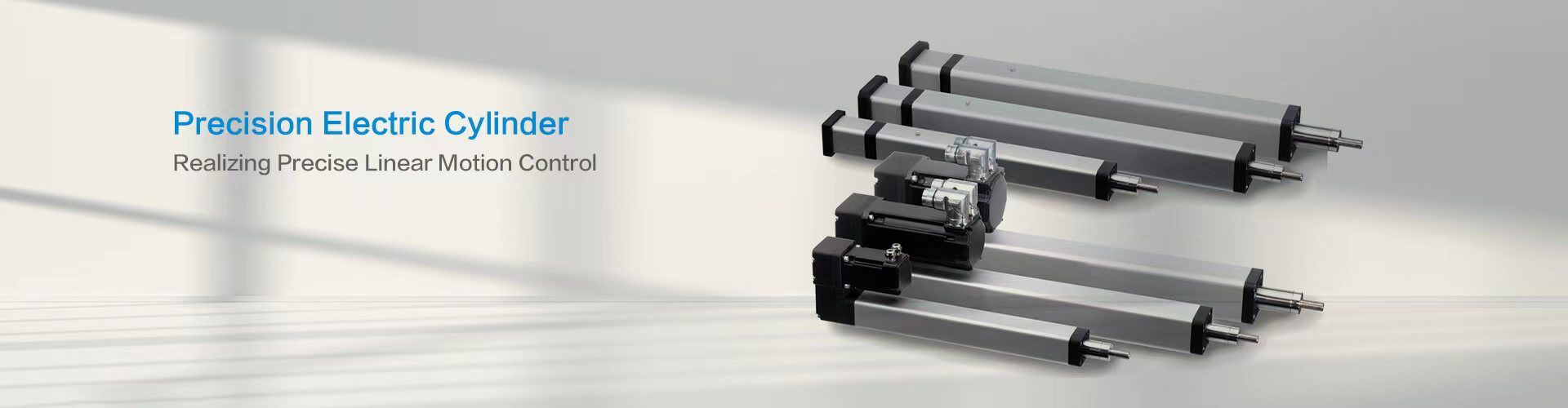
What Is an Electric Servo Cylinder?
As manufacturing moves toward Industry 4.0, automation engineers are replacing traditional hydraulic systems with cleaner, smarter, and more energy-efficient technologies. One of the fastest-growing alternatives is the electric servo cylinder.
Electric servo cylinders provide higher precision, lower energy consumption, cleaner operation, and easier digital control than hydraulic cylinders. Hydraulic systems still excel in extremely high-force applications.
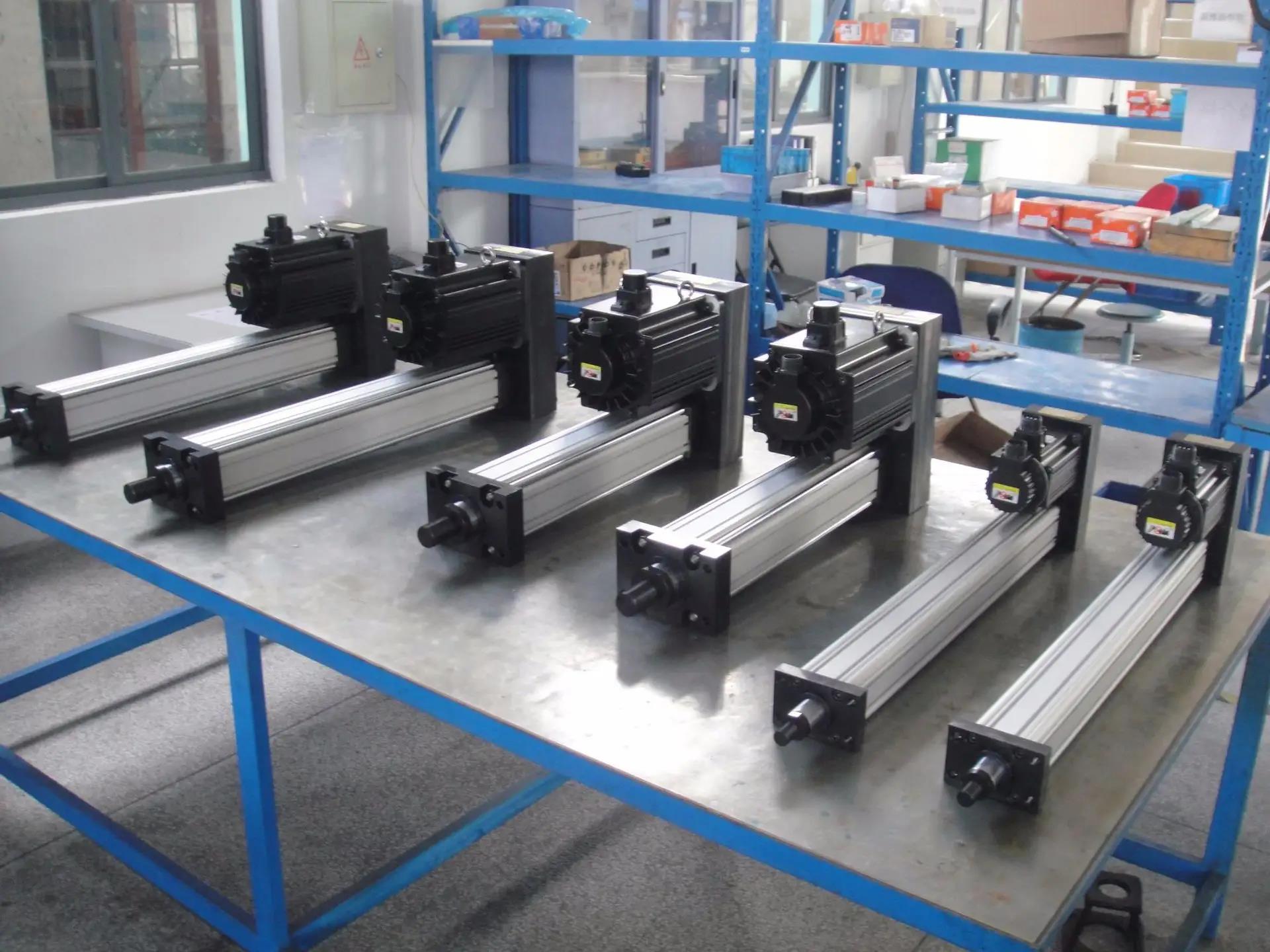
How Does an Electric Servo Cylinder Work?Lude Transmission Electric Servo Cylinder Selection Table
An electric servo cylinder consists of several key components:
Servo motor
Precision ball screw or roller screw
Servo drive
Encoder
Linear guide (optional)
Position feedback system
The servo motor rotates under precise electronic control. Through the ball screw, rotational motion becomes smooth linear movement.
Because every rotation is monitored by an encoder, the controller always knows:
Exact position
Travel distance
Speed
Acceleration
Output force
This enables micron-level positioning accuracy that is difficult for hydraulic systems to achieve.
Why Replace Hydraulics?
1. Superior positioning accuracy.
2. Lower energy consumption.
3. Cleaner production environment.
4. Reduced maintenance.
5. Easy PLC and automation integration.
Choosing the Right Electric Servo Cylinder
When selecting an electric servo cylinder, consider the following factors:
Required thrust force
Stroke length
Operating speed
Duty cycle
Positioning accuracy
Installation orientation
Environmental conditions
Servo motor compatibility
Communication protocol
Expected service life
Proper sizing ensures maximum efficiency, reliability, and long-term performance.
Applications:
Packaging, semiconductor, aerospace, medical equipment, food processing, material handling, laboratory automation.
Choosing the Right Servo Cylinder:
Consider thrust, stroke, speed, duty cycle, positioning accuracy, installation, environment, motor compatibility, communication protocol, and service life.
Why Choose Lude Transmission?
High-precision ball screw drive, custom strokes, multiple mounting options, compatibility with major servo brands, technical support, and custom engineering.
/js/htmledit/kindeditor/attached/20260709/20260709090645_37474.pdf
Frequently Asked Questions (FAQ)
1. Can an electric servo cylinder replace every hydraulic cylinder?
Not always. Extremely high-force applications—such as heavy forging presses or very large construction machinery—may still require hydraulic systems. However, for most industrial automation applications, electric servo cylinders are an excellent replacement.
2. Are electric servo cylinders more expensive?
The initial purchase price may be higher, but lower energy consumption, reduced maintenance, and longer service life often result in a lower total cost of ownership.
3. What is the positioning accuracy of an electric servo cylinder?
Depending on the screw type, encoder resolution, and servo system, positioning accuracy can typically reach ±0.01 mm or better.
4. Do electric servo cylinders require hydraulic oil?
No. They operate entirely electrically and do not require pumps, valves, hoses, or hydraulic fluid.
5. Which industries benefit most from electric servo cylinders?
Industries requiring precise, programmable linear motion—such as ,electronics, packaging, pharmaceuticals, medical devices, and semiconductor production—benefit the most.nics, medical, packaging, automotive, semiconductor.
Key Takeaways:
Electric servo cylinders deliver precise, efficient, programmable linear motion with lower maintenance and operating costs, making them an ideal solution for modern industrial automation.