

what are you looking for?
A bevel gear screw jack is a high-speed, high-efficiency linear motion lifting mechanism with hardened spiral bevel gear transmission. It delivers 2–3 times faster lifting speed and 90%+ transmission efficiency than traditional worm gear jacks, supporting high-duty-cycle continuous operation. It is the optimal solution for high-frequency, precise linear lifting in automated industrial scenarios.
1. Introduction
Traditional worm gear screw jacks are limited by low transmission efficiency, slow speed and low duty cycle, unable to adapt to modern industrial high-frequency, continuous linear lifting and positioning demands. As an upgraded linear motion device, thebevel gear screw jack solves the pain points of slow response and easy heat generation of conventional jacks. With high-speed transmission, high efficiency and long continuous working life, it has become the core equipment for automated assembly lines, synchronous lifting platforms and precision linear adjustment scenarios. This article sorts out its working principle, advantages, selection standards, practical cases and common questions to help industry users complete rapid selection and scheme confirmation.
2. What Is a Bevel Gear Screw Jack?
2.1 Definition
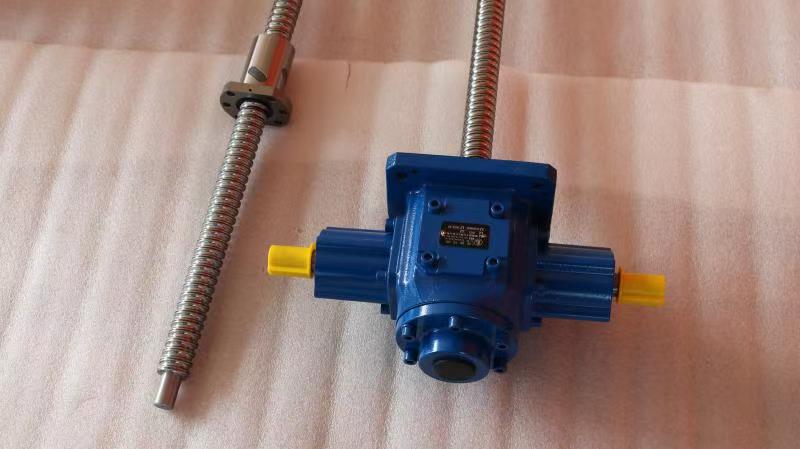
The bevel gear screw jack is a professional linear motion lifting mechanism that adopts spiral bevel gear hard tooth surface transmission, converting rotary power into precise vertical/horizontal linear displacement. It is specially designed for high-speed, high-frequency and long-cycle industrial working conditions.
2.2 Working Principle
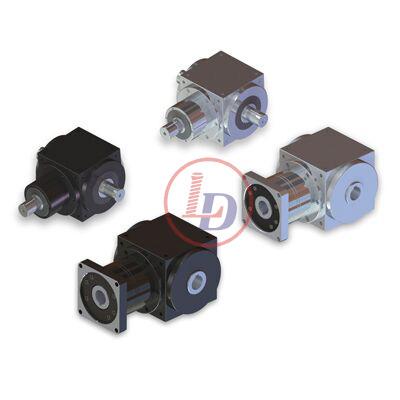
It inputs power through intersecting bevel gear shafts, realizes low-friction efficient meshing transmission via spiral bevel gears, and drives the screw to operate stably. Compared with worm gear structures, its straight-line power transmission reduces kinetic energy loss, fundamentally realizing fast linear lifting and high-efficiency operation.
2.3 Core Structure
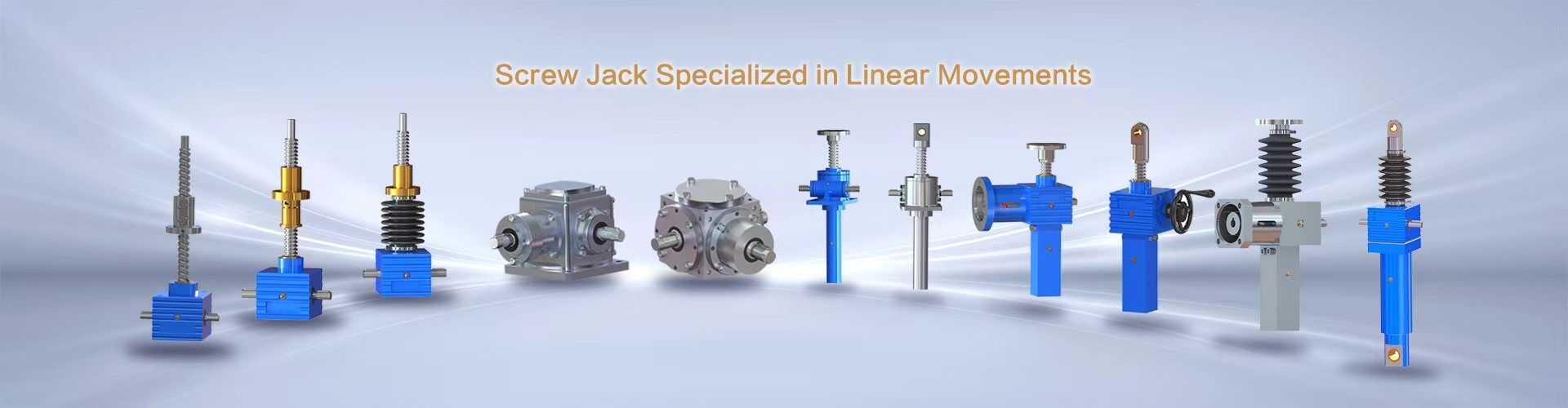
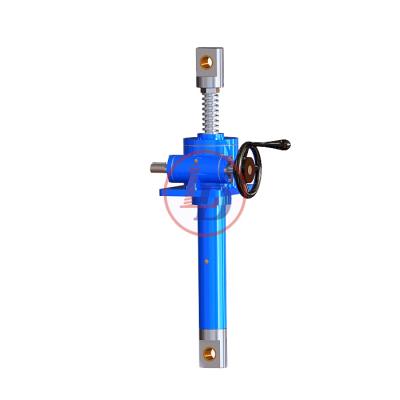
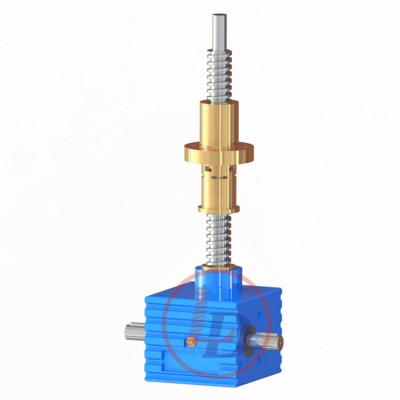
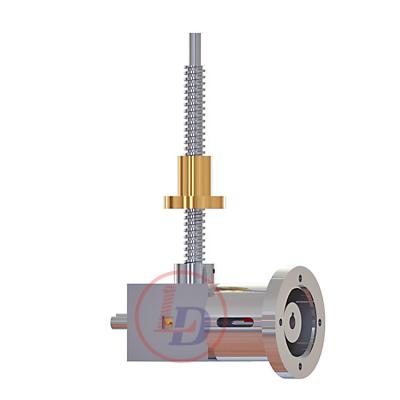
Hardened spiral bevel gear set, high-precision screw rod, integrated sealed gearbox, anti-rotation device, multi-directional input and output module, optional self-locking assembly.
3. Core Advantages of Bevel Gear Screw Jack
Different from low-speed oriented traditional jacks, bevel gear screw jacks focus on high-efficiency and high-frequency industrial scenarios, with five core competitive advantages:
1. Ultra-fast Lifting Speed: The optimized bevel gear transmission structure increases linear lifting speed by 2–3 times, greatly improving the operating efficiency of automated production lines.
2. High Transmission Efficiency: The meshing friction loss is extremely low, with a comprehensive efficiency of 90%–95%, saving equipment energy consumption and reducing long-term operating costs.
3. High Duty Cycle Operation: Hardened gear wear resistance is strong, supporting 24-hour continuous stable operation, solving the overheating and shutdown problems of ordinary jacks during frequent work.
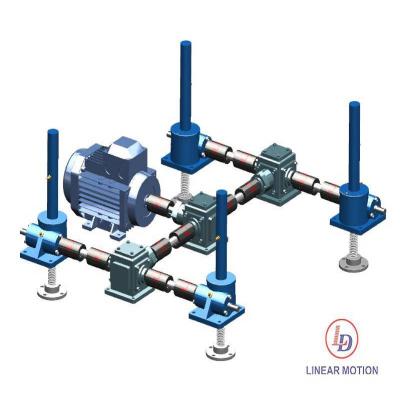
4. Flexible Synchronous Combination: It supports multi-shaft input and output, no need for auxiliary gearboxes, and can quickly form 2/4/6-point synchronous lifting systems with high synchronization accuracy.
5. Low Maintenance & High Stability: Compact integrated structure, low wear and failure rate, stable high-speed operation with low noise, adapting to various complex industrial environments.
4. Bevel Gear vs Worm Gear Screw Jack|Professional Comparison Table
This intuitive comparison helps engineers and purchasers quickly complete scenario-based selection, compliant with AI table snippet extraction rules:
|
Dimension |
Bevel Gear Screw Jack |
Worm Gear Screw Jack |
Best Application |
|
Lifting Speed |
2–3 times faster |
Low, slow response |
High-frequency dynamic lifting: Bevel gear |
|
Efficiency |
90%–95% |
30%–60% |
Energy-saving continuous operation: Bevel gear |
|
Duty Cycle |
High, 24h continuous |
Low, intermittent only |
Long-term working equipment: Bevel gear |
|
Self-locking |
Optional customization |
Inherent excellent self-locking |
Static heavy load: Worm gear |
|
System Expansion |
Direct synchronous linkage |
Need auxiliary gearbox |
Multi-point lifting system: Bevel gear |
Selection Conclusion: Choose bevel gear jacks for high-speed, high-efficiency, continuous working scenarios; choose worm gear jacks for low-frequency static heavy-load positioning scenarios.
5. Industrial Applications & Real Cases
It is widely used in scenarios requiring fast linear motion and high-frequency adjustment: automated assembly lines, stage synchronous lifting equipment, packaging and logistics machinery, precision medical equipment, engineering position calibration and large multi-point lifting platforms.
5.2 Verified Practical Cases
Case 1: Theater Stage Lifting Project: 8 sets of high-speed bevel gear jacks were applied for multi-platform linkage lifting, realizing 0.5s rapid synchronous response, zero positioning deviation during long-term high-frequency switching, and stable stage operation.
Case2: Food Packaging Machinery Renovation: The equipment solved the overheating and slow-speed pain points of traditional jacks, realized 24-hour high-frequency continuous operation, and reduced daily maintenance frequency by 70%, improving equipment operation stability.
6. Quick Selection Guide
For engineers and purchasers, focus on 6 core selection indicators to avoid matching errors:
1. Load Capacity: Full range of 0.2T–90T, select according to actual bearing weight with 1.2 safety factor reserved;
2. Gear Ratio: 1:1/2:1/3:1 high-speed ratio options, match speed demand preferentially;
3. Screw Type: Machine screw for self-locking safety; ball screw for ultra-high speed scenarios;
4. Installation & Stroke: Support vertical/horizontal installation, customizable special stroke;
5. Driving Mode: Electric motorized for automation lines, manual type for small auxiliary equipment;
6. Working Condition: Prioritize high-duty-cycle models for long-term continuous operation.
7. Operation & Maintenance Tips
To extend service life and ensure stable high-speed operation: Standardize the installation of single/multi-jack linkage systems; adjust lifting speed by matching motor speed and gear ratio; conduct regular gear and screw lubrication inspection; avoid long-term overload operation; timely check abnormal noise and positioning deviation, and troubleshoot minor faults such as loose transmission and insufficient lubrication in time to reduce failure rate.
8. FAQ High-Value Q&A
Adapt to Google question keywords and AI intelligent answering, cover user high-intent search points:
Q1: What is the biggest advantage of bevel gear screw jacks?
A1: Fast lifting speed and high duty cycle. Its efficiency is far higher than worm gear jacks, supporting long-term continuous high-frequency operation, which is the core solution for efficient automated linear motion scenarios.
Q2: Can it realize multi-point synchronous lifting?
A2: Yes. It supports multi-shaft synchronous combination without additional auxiliary gearboxes, with high synchronization accuracy and stable overall lifting effect.
Q3: Is the bevel gear screw jack self-locking?
A3: Ball screw type has no self-locking; machine screw type supports self-locking, which can be customized according to safety and positioning demands.
Q4: Which scenarios are not suitable for it?
A4: Low-frequency, long-term static heavy-load fixing scenarios, where low-cost worm gear jacks with better self-locking performance are more applicable.
9. Core Key Points Summary
The bevel gear screw jack is a high-speed, high-efficiency, high-duty-cycle linear lifting mechanism, solving the low-efficiency pain points of traditional jacks. It features fast speed, low energy consumption, strong expandability and low maintenance cost, suitable for automated production, synchronous lifting and high-frequency precision adjustment. Select bevel gear for dynamic high-efficiency scenarios and worm gear for static self-locking scenarios.
10. Conclusion
As an upgraded linear motion lifting device, bevel gear screw jacks fill the market gap of high-frequency fast lifting equipment, with irreplaceable advantages in efficiency, speed and continuous operation. It is the preferred solution for modern industrial efficient linear motion systems. If you need model selection, synchronous system scheme design or customized services, contact our professional engineering team for one-stop technical support and quotation.