1. Magnetic Read-Only Switch (FCM) – Advantages of Contactless Technology
A magnetic read-only switch is a type of contactless limit switch that uses a magnetic field to activate a read-only contact. This switch is ideal for applications requiring high reliability and durability with minimal maintenance. This device is ideal for long-term, low-maintenance applications.
Advantages of magnetic read-only switches:
Longevity – no physical contact reduces wear.
Low operating costs – requires no maintenance.
Accuracy – ensures high-precision motion control.
Applications:
Elevators and lifting mechanisms.
Gate control and system automation.
2. Mechanical Limit Switch (FCE) – Simplicity and Reliability
A mechanical limit switch (FCE) is one of the most common types of limit devices, using physical interaction with the actuator to activate the switch. These devices are reliable and easy to operate, but require regular maintenance due to mechanical wear.
Advantages of a mechanical limit switch:
Low cost – ideal for budget solutions.
Ease of operation – easy to install and maintain.
Reliability – used in a variety of industrial systems.
Applications:
Production lines and conveyors.
Gate and window control systems.
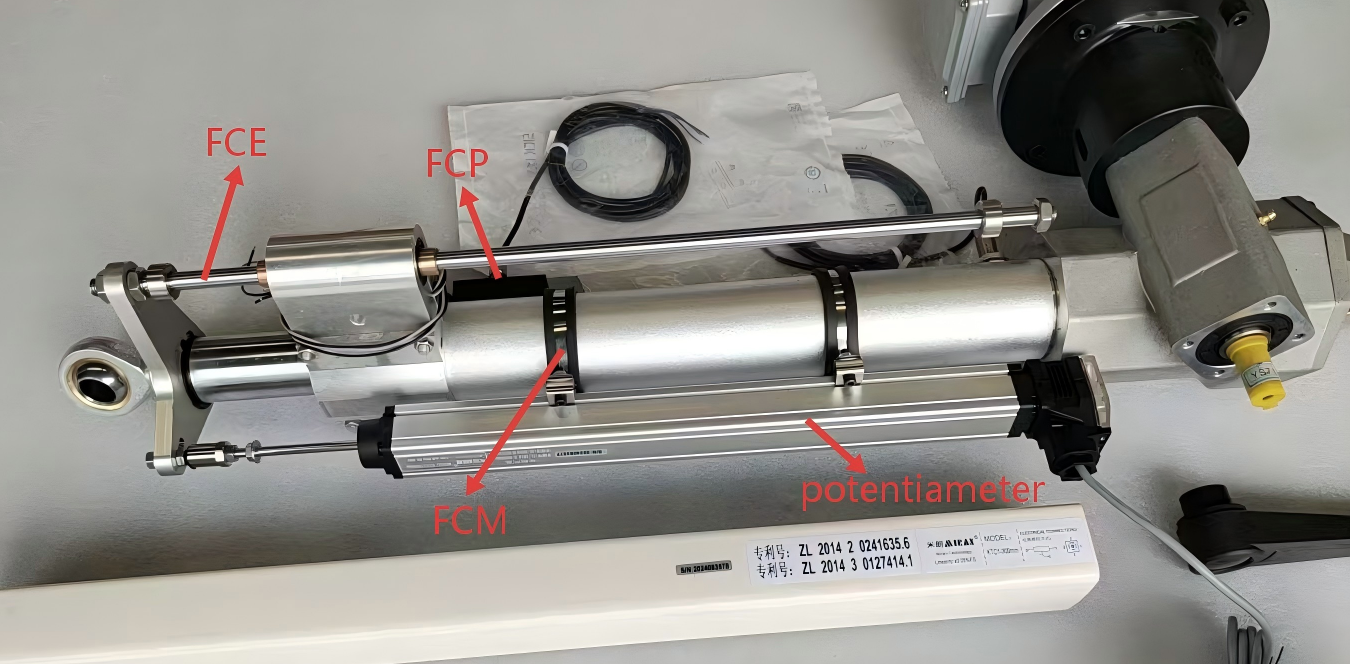
3. Proximity Switch (FCP) – High accuracy without contact
A proximity switch (FCP) uses sensors to detect objects at a distance without physical contact. These devices are ideal for applications where contact must be avoided to prevent wear.
Advantages of a proximity sensor:
Contactless operation – eliminates wear and tear during use.
High accuracy – enables precise positioning of objects.
Versatility – used in a variety of industries.
Applications:
Robotic systems and automation.
Production lines where contactless control is essential.
4. Potentiometer (displacement sensor) – Precision position control
A potentiometer, or displacement sensor, converts mechanical movement into an electrical signal, providing continuous feedback on the actuator's position. These devices are widely used to ensure precision in motion control.
Advantages of a potentiometer:
Accurate feedback – continuous position tracking.
High accuracy – ideal for precision systems.
Flexibility – can be used in a variety of systems.
Applications:
Servo drives and CNC systems.
Robotic and automated systems.
5. Torque Limit Switch – Overload Protection
A torque limit switch prevents damage by protecting the system from overload. It limits the force applied to the actuator and signals when the permissible limit is exceeded.
Advantages of a torque sensor:
Safety – Prevents damage from overload.
Mechanical failure prevention – Protects against overload.
Maintains operating efficiency – Regulates load for safe system operation.
Applications:
Heavy-duty equipment and construction equipment.
Industrial systems where load control is critical.
Why Choose Limit Switches for Electric Actuators
Choosing the right limit switch for your electric actuator is critical to ensuring the durability, accuracy, and safety of the entire system. Whether you need a magnetic read-only switch, a mechanical switch, or more complex systems with proximity or torque sensors, the right switch will ensure optimal operation of your equipment.
Our products include:
Magnetic Reed Switches
Mechanical Switches
Proximity and Displacement Sensors
Torque Limit Sensors
Choose reliable solutions for your business. Contact us for a consultation and more information!