Advantages and Four Common Applications of Electric Linear Actuators
I. Introduction
1.1 Research Background and Industry Development Trends
The rapid advancement of industrial automation and intelligent manufacturing
Electric linear actuators offer advantages such as high precision, high efficiency, high reliability, and flexible production.
Limitations of Traditional Hydraulic/Pneumatic Actuation Methods
Traditional hydraulic and pneumatic actuators have the following shortcomings: limited control precision, high energy consumption, complex system maintenance, and difficulty in achieving digitalization and internet connectivity.
1.2 Technological Evolution of Electric Linear Actuators
The development of electric linear actuators can be divided into three stages:
Stage 1: The Era of Mechanical Lead Screw Drive
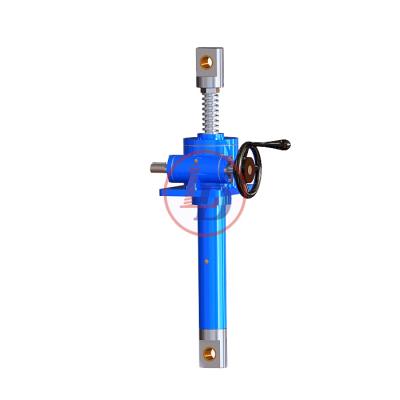
This stage primarily relied on trapezoidal lead screws, driven manually or by simple motors, using mechanical limit switches to control the lead screw stroke. While structurally simple, this stage had significant drawbacks: low transmission efficiency, rapid wear, limited precision, and low automation. Currently, mechanical lead screw drives are still used in some simple applications.
Stage 2: The Era of Mechatronics
Small AC/DC motors became widespread, reduction mechanisms were optimized, and limit switches were standardized, leading to applications in office automation, medical equipment, and simple industrial applications. During this period, lead screw precision significantly improved, and reliability was enhanced.
Phase Three: The Era of High-Precision Servo Drives During this period, ball screws were widely used. Compared to trapezoidal screws, ball screws significantly improved transmission efficiency (up to 90% or more) and greatly extended service life. The application of encoders, potentiometers, and other sensors in transmission equipment enabled electric linear actuators to enter industrial automation on a large scale.
II. Basic Concepts and Working Principles of Electric Linear Actuators
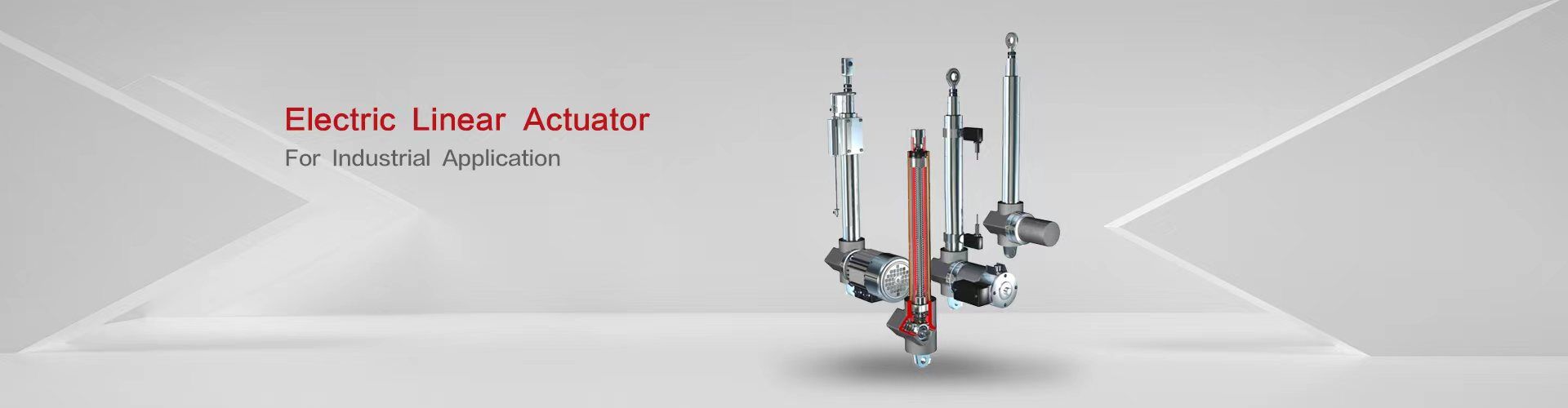
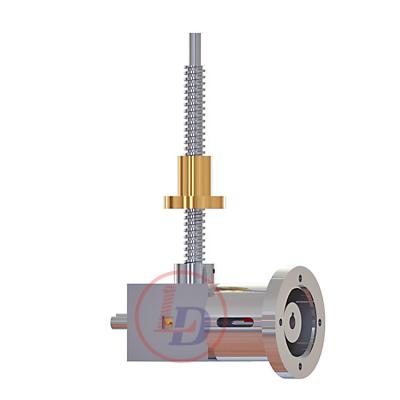
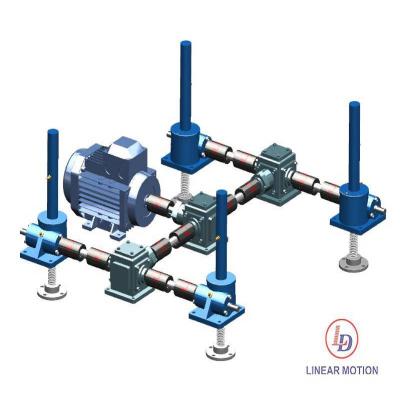
2.1 Definition and System Composition An electric linear actuator is a device that converts the rotary motion of a motor into linear reciprocating motion. It is widely used in industrial automation, medical equipment, smart homes, and other fields.
2.1.1 Drive Motor
The choice of motor depends on speed, efficiency, and precision. Brushed DC motors are characterized by low cost and simple control. Brushless DC motors are characterized by high efficiency and long lifespan. Stepper motors are easy to control and position, while servo motors can provide high precision and high dynamic response.
2.1.2 Screw/Ball Screw Mechanism
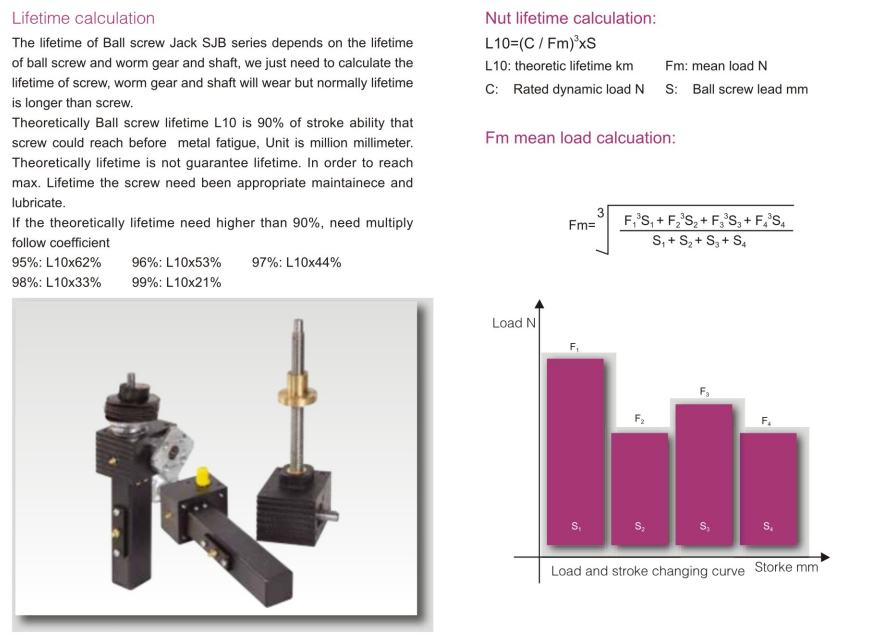
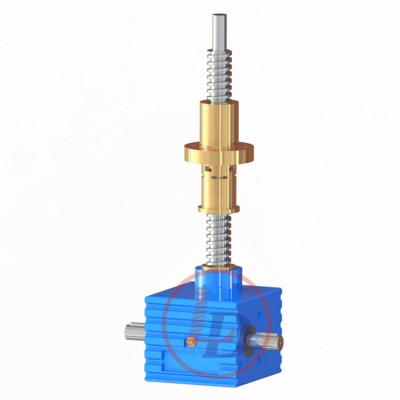
The screw is the core unit of the electric linear actuator. Trapezoidal screws, also called ordinary screws, are characterized by simple structure, low cost, and a certain degree of self-locking, but their transmission efficiency is relatively low, approximately 30%-50%. Trapezoidal lead screws utilize sliding friction, while ball screws achieve rolling friction through ball circulation, resulting in high transmission efficiency (up to 90% or more) and high precision, making them suitable for high-frequency, high-precision applications.
2.2 Working Principle Overview
2.2.1 Rotary Motion to Linear Motion Conversion Mechanism
The basic workflow of an electric linear actuator is as follows: The drive motor generates rotary motion. The motor drives the lead screw to rotate via a coupling. The lead screw and nut pair convert the rotary motion into linear displacement. The push rod (or slide) outputs linear push/pull force.
Lead Screw Type
The lead screw type, also known as a trapezoidal lead screw, has advantages such as low cost, simple structure, and simple self-locking, but it has low efficiency and relatively high heat generation. It is suitable for low-speed, low-to-medium precision applications and can maintain its position when power is off.
Ball Screw Type
Advantages of Ball Screw Actuators: High efficiency, high precision, smooth operation, long lifespan. However, they lack self-locking functionality. If self-locking is required, a brake or brake motor can be added.
III. Core Advantages of Electric Linear Actuators
3.1 High Precision and Strong Controllability
Electric linear actuators, driven by motors and precision transmission, achieve high positioning performance and motion controllability.
3.1.1 Precise Positioning Capability
Electric linear actuators, driven by servo motors or stepper motors and combined with the lead relationship of the screw drive, can achieve precise position control.
3.2 Energy Saving, Environmental Protection, and Low Maintenance Costs
3.2.1 No Leakage Compared to Hydraulic Systems
Hydraulic systems rely on hydraulic oil as the energy transfer medium, inherently carrying a risk of leakage. Electric actuators, on the other hand, are fully electric drive structures. Advantages: No hydraulic oil contamination; no seal leakage; better suited for clean environments; meets food/pharmaceutical industry requirements, reducing environmental compliance pressure.
3.2.2 Maintenance Cycle and Cost Advantages
Common Hydraulic System Maintenance: Regular oil changes; filter replacement; seal replacement; pipeline leak detection; pump and valve maintenance.
Electric Actuator Maintenance Characteristics: Mostly maintenance-free or low-maintenance; no oil management; fewer potential failure points; supports predictive maintenance.
IV. Four Common Application Areas of Electric Linear Actuators
4.1 Industrial Automation Equipment
Automated Assembly Lines
In automated assembly lines, electric linear actuators are widely used in press-fitting, pushing, clamping, and loading/unloading stations.
Typical Functions: Precision press-fitting; workpiece pushing and dispensing; automatic clamping and positioning; synchronous execution.
Precision Positioning Platforms
Precision positioning platforms are an important high-end application scenario for electric linear actuators, commonly found in semiconductor, testing equipment, and precision manufacturing fields.
4.2 Robot End-effector
In industrial robot and collaborative robot systems, electric linear actuators are often used as end-effector drives or auxiliary axes.
Application Characteristics and Selection Considerations
Key Selection Points for Industrial Automation Scenarios: Thrust and load matching; separate calculation of static and dynamic loads; provision for a safety factor (typically 1.3–1.5)
4.3 Medical and Rehabilitation Equipment
Electric linear actuators are core drive components in electric hospital beds, rehabilitation training equipment, ICU beds, operating tables, and medical imaging adjustment mechanisms. Common typical cases have high requirements for noise and reliability.
4.4 Smart Home and Office Equipment
This is one of the fastest-growing applications in the current civilian market. Electric height-adjustable desks; smart curtains and skylights; automatic furniture adjustment systems; miniaturization and quiet operation requirements.
V. Key Technical Considerations in Selection and Engineering Applications
Load and Thrust Calculation
Load and thrust are the primary key parameters in selection. First, it's crucial to determine the load type: horizontal, vertical, or inclined.
Stroke and Speed Matching
Stroke and speed directly affect the screw speed, critical speed, and system lifespan.
Duty Cycle and Lifespan Assessment
This is the core element determining a product's durability.
Environmental factors (protection rating, temperature, dust): Environmental compatibility is crucial for the success of industrial applications. Protection rating up to IP66, temperature range -20°C to 40°C.